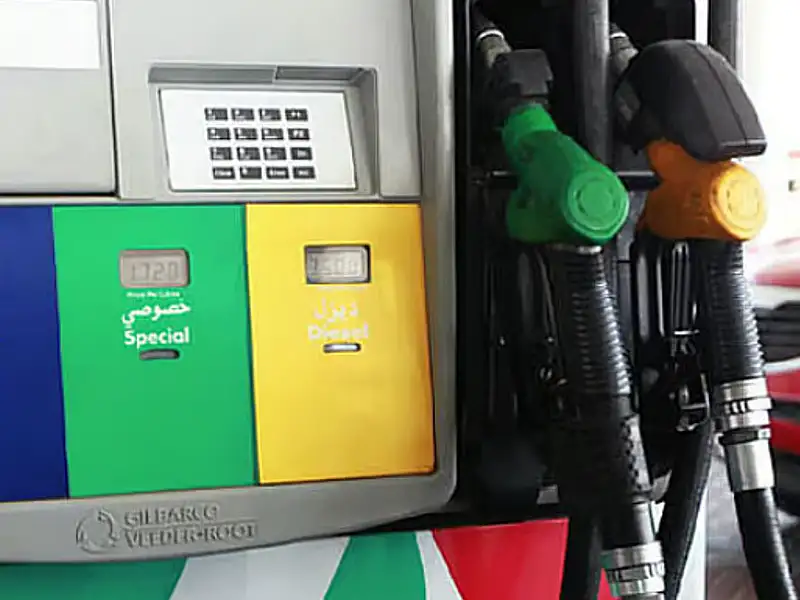
UAE fuel prices have crossed Dh4 per litre for October 2026, reaching their highest levels in more than four years as elevated global oil prices continue to put pressure on fuel markets.
The UAE Fuel Price Committee increased petrol prices by up to 60 fils per litre for October, representing increases of more than 16 per cent for some grades. Super 98 rose from Dh3.80 to Dh4.40 per litre, while Special 95 increased from Dh3.69 to Dh4.28. E-Plus 91 climbed from Dh3.61 to Dh4.21 per litre.
Diesel also became more expensive, rising from Dh4.30 to Dh4.80 per litre.
The new rates came into effect on October 1, 2026, following a period of elevated crude oil prices linked to geopolitical tensions and concerns surrounding global energy supplies.
UAE fuel prices return above Dh4 per litre
The latest increase marks the first time since 2022 that petrol prices in the UAE have moved above Dh4 per litre.
The previous episode occurred after the Russia-Ukraine conflict began in February 2022, when concerns about global energy supplies pushed crude prices sharply higher.
In July 2022, Super 98 reached Dh4.63 per litre, while Special 95 climbed to Dh4.52.
The October 2026 rates remain below those 2022 peaks for the two petrol grades, but they represent the highest UAE fuel prices in more than four years.
The latest increases also follow a period of renewed upward movement in fuel costs during 2026, after prices declined earlier in the year.
Super 98 increased by around 15.8 per cent, Special 95 by approximately 16 per cent and E-Plus 91 by about 16.6 per cent. Diesel rose by approximately 11.6 per cent.
The increases mean motorists will need to allocate more money to fuel each month, particularly those with larger vehicles or long daily commutes.
Why are UAE fuel prices rising?
The movement in UAE fuel prices is closely linked to international oil markets.
The UAE deregulated domestic fuel prices in 2015, allowing monthly retail rates to reflect movements in global oil prices, alongside distribution and operating costs.
As a result, significant changes in international crude prices can eventually feed through into local petrol and diesel prices.
During September, crude markets remained highly sensitive to developments in the Middle East.
The closure and disruption surrounding the Strait of Hormuz created concerns over the movement of oil and other energy commodities through one of the world’s most important energy shipping routes.
At the same time, continued tensions involving the US and Iran contributed to uncertainty over future supplies.
Brent crude traded around or above $100 a barrel during September, while prices moved substantially higher at points as regional tensions escalated.
On September 30, Brent was trading at around $102.80 a barrel, while West Texas Intermediate was around $89.28. Brent had reached approximately $107 a barrel the previous day.
Strait of Hormuz remains a major market concern
The Strait of Hormuz has remained a major focus for global energy markets because of its importance to international oil transportation.
Any prolonged disruption to the waterway can increase concerns about the availability and movement of crude supplies, potentially raising the risk premium in oil prices.
Market participants have therefore been closely monitoring developments involving the United States, Iran and diplomatic efforts aimed at restoring normal shipping conditions.
Higher oil prices can also create broader economic effects because energy is an important input for transportation, manufacturing, logistics and other sectors.
Higher fuel costs could affect household budgets
The increase in UAE fuel prices will have a direct effect on household transportation costs.
The impact will depend on vehicle size, fuel efficiency, driving frequency and the distance travelled each month.
A driver filling a 51-litre compact-car tank with Super 98 would pay Dh224.40 at the October rate, compared with Dh193.80 in September.
For a 62-litre sedan, a full Super 98 tank would cost Dh272.80, compared with Dh235.60 in September.
For a larger 74-litre SUV, the same fuel would cost Dh325.60, compared with Dh281.20 previously.
Depending on the vehicle and fuel grade, a full tank can therefore cost significantly more than it did in September.
For households with multiple vehicles, delivery businesses and workers with long daily commutes, higher petrol prices can translate into a noticeable increase in monthly transportation expenses.
Businesses may also face higher operating costs
The impact of higher fuel prices extends beyond private motorists.
Companies operating fleets of cars, vans and trucks can face increased operating expenses when petrol and diesel prices rise.
Logistics companies, delivery services, construction businesses and other industries that rely heavily on road transportation can be particularly exposed to fuel-price movements.
Higher transportation costs can also affect the cost of moving goods between warehouses, retail outlets and customers.
The extent to which businesses pass those costs on to consumers will depend on competition, operating margins and broader demand conditions.
Diesel reaches Dh4.80 per litre
Diesel has also experienced a substantial increase.
The October price of Dh4.80 per litre represents a 50-fils increase from September’s Dh4.30.
Diesel is particularly important for commercial transportation and logistics, meaning the latest increase has implications beyond private vehicle owners.
The rise in diesel costs comes at a time when international energy markets are already dealing with uncertainty surrounding crude supplies and transportation routes.
Higher diesel prices can increase the cost of operating commercial vehicles and moving goods across the UAE.
Oil prices remain the key factor
The direction of international crude prices will remain an important factor for future UAE fuel prices.
The UAE announces retail fuel rates each month, meaning motorists and businesses receive updated prices based on the prevailing global market environment.
If international oil prices remain elevated, domestic fuel rates could continue to face upward pressure. Conversely, a sustained decline in crude prices could eventually reduce pressure on retail fuel rates.
However, the relationship is not necessarily one-to-one every month because several factors can influence the final retail price.
These include international oil prices, distribution costs, operating expenses and wider market conditions.
From earlier declines to October’s four-year high
The movement in UAE fuel prices during 2026 illustrates how quickly global energy-market conditions can change.
Earlier in the year, petrol prices had declined following a period of increases.
Super 98 subsequently moved higher again, followed by further increases in August and September.
The October increase has now pushed all three major petrol grades above Dh4 per litre.
This progression highlights how developments in international energy markets can quickly affect household and business costs in the UAE.
What higher fuel prices mean for UAE motorists
For consumers, the most immediate consequence is higher spending at petrol stations.
Motorists may respond by reducing unnecessary driving, combining trips, using public transport more frequently or choosing more fuel-efficient vehicles.
The impact will vary significantly between residents.
Someone who drives a short distance each day may experience a relatively limited increase in monthly expenses, while a commuter travelling long distances every day could face a much larger additional cost.
The impact can also differ between emirates and communities because commuting distances and reliance on private vehicles vary.
Higher energy costs and inflation
Higher oil prices can have implications beyond the fuel station.
Transportation is an important component of economic activity, and rising fuel costs can increase expenses for businesses involved in logistics, distribution and delivery.
If higher energy costs persist, they can contribute to broader inflationary pressures.
For financial markets, investors also watch the relationship between energy prices, inflation and interest-rate expectations.
Sustained increases in crude prices can complicate efforts to control inflation because energy costs can feed into other parts of the economy.
Global oil market remains closely watched
The latest UAE fuel prices announcement comes at a particularly sensitive time for global energy markets.
Developments involving the US, Iran, the Strait of Hormuz and regional oil infrastructure continue to influence market expectations.
Oil prices moved higher on September 30 after US President Donald Trump rejected suggestions that he was prepared to ease sanctions on Iran, while Qatar pushed for peace talks.
The developments came after crude prices had fallen in the previous session amid signs of recovering supplies from the Middle East.
These competing signals demonstrate why oil markets remain highly volatile.
Any progress towards restoring stable regional energy flows could reduce supply concerns, while further disruptions could place renewed upward pressure on crude prices.
For the UAE, the next monthly fuel-price announcement will therefore depend heavily on how international oil markets develop during October.
UAE motorists enter October with higher costs
The October increase places UAE petrol prices at their highest level in more than four years and takes all three major petrol grades above Dh4 per litre.
Super 98 now costs Dh4.40, Special 95 is Dh4.28 and E-Plus 91 is Dh4.21, while diesel has reached Dh4.80 per litre.
The latest increase reflects the continued sensitivity of the UAE fuel market to international oil prices and geopolitical developments.
For households, commuters and businesses, the immediate effect will be higher transportation costs. For financial markets, the wider concern is that sustained energy-price increases could contribute to inflationary pressure and influence expectations for interest rates.
With global crude markets still closely tied to developments in the Middle East, the direction of UAE fuel prices in the coming months will remain closely watched by motorists, businesses and consumers across the country.
Post Views: 27