Dubai Islamic Bank appoints new chairman
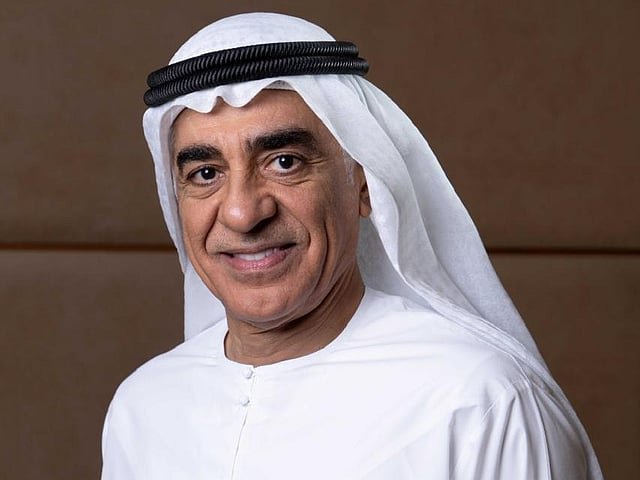
Dubai Islamic Bank, the UAE’s largest Islamic bank by assets, has appointed Fadhel Abdulbaqi Al Ali as chairman of its board of directors, marking a change in leadership at one of the country’s most prominent financial institutions.
The appointment became effective on September 30, 2026, according to the bank.
Al Ali succeeds Mohammed Ibrahim Al-Shaibani, who stepped down as chairman and as a member of the board on September 20 for personal reasons. The bank did not provide additional details regarding Al-Shaibani’s departure.
The appointment comes at an important stage for Dubai Islamic Bank, commonly known as DIB, as the lender continues to expand its international presence and strengthen its position in Islamic finance.
DIB said the bank remains focused on its long-term strategy and will continue to maintain governance and financial discipline while pursuing sustainable growth.
Fadhel Al Ali brings more than three decades of experience
Fadhel Abdulbaqi Al Ali brings more than 30 years of experience across corporate governance, banking, investment, real estate and hospitality.
His professional background includes senior leadership positions at some of the UAE’s major financial and business institutions.
Al Ali currently serves as chairman of the Dubai Financial Services Authority and Majid Al Futtaim Capital. He is also a board member of the Commercial International Bank of Egypt.
His other institutional responsibilities include membership of the Higher Committee for the Development of the Economic and Financial Sector and the Financial Stability Council.
Before his current positions, Al Ali served as chief executive of Dubai Holding. He also held senior leadership responsibilities at First Abu Dhabi Bank, where he served as deputy chief executive and group chief operating officer.
His career has therefore covered banking operations, investment management, corporate leadership and large-scale institutional governance.
Board expresses confidence in new leadership
DIB’s board said it was confident that Al Ali’s leadership experience and record of institutional stewardship would support the bank in its future endeavours.
The board said his experience would contribute to DIB’s objective of positioning itself as a leading Islamic financial group.
The bank also thanked Mohammed Ibrahim Al-Shaibani for his service and said his leadership had supported DIB’s growth and transformation.
The transition represents a change at the top of the board while the bank maintains continuity in its broader strategic direction.
DIB has indicated that its long-term strategy remains unchanged, with continued emphasis on sustainable growth, strong governance and financial discipline.
DIB’s position in UAE Islamic banking
Established in 1975, Dubai Islamic Bank is listed on the Dubai Financial Market and is the UAE’s largest Islamic bank by assets.
The institution describes itself as the world’s first full-service Islamic bank.
Over the decades, DIB has developed from a UAE-focused Islamic banking institution into a financial group with operations across several international markets.
The bank’s expansion reflects the broader development of Islamic finance, with financial institutions from the Gulf increasingly building operations across emerging markets in Asia, Africa and other regions.
The group has more than $115 billion in assets and a market capitalisation of more than $18 billion. It employs approximately 12,000 people and operates more than 540 branches across the Middle East, Asia and Africa.
DIB serves more than 11 million customers across its various markets.
International presence continues to expand
DIB’s operations extend beyond the UAE, with a presence in Pakistan, Türkiye, Indonesia, Kenya, Sudan and Bosnia.
The bank has used acquisitions and strategic investments as part of its international expansion.
One of its notable transactions was the acquisition of Noor Bank, which strengthened DIB’s position in the UAE’s Islamic banking sector.
DIB also holds a stake of nearly 25 per cent in Indonesia’s Panin Dubai Syariah Bank, giving it exposure to one of the world’s largest Muslim-majority markets.
More recently, the bank acquired a 25 per cent minority stake in Türkiye’s T.O.M. Group.
The investment in Türkiye represents another step in DIB’s international expansion and gives the group exposure to the country’s financial services market.
These international operations form an important part of DIB’s broader ambition to develop into a leading Islamic financial group.
Focus on governance and financial discipline
The appointment of a chairman with extensive experience in governance and financial institutions comes as DIB continues to manage a large and increasingly diversified business.
The bank said it would maintain its focus on governance and financial discipline while pursuing sustainable growth.
For a financial institution operating across multiple jurisdictions, governance is particularly important because the group must manage different regulatory environments, market conditions and economic cycles.
Al Ali’s experience in financial-sector governance and institutional leadership comes against this backdrop.
His current role as chairman of the Dubai Financial Services Authority also gives him experience in financial regulation and oversight within the Dubai International Financial Centre.
His previous executive roles in banking and Dubai Holding add experience in managing large organisations and complex corporate structures.
Islamic finance continues to develop
DIB’s expansion comes amid continued growth in Islamic finance across the Gulf and international markets.
Islamic banking operates according to principles that prohibit interest-based lending and certain forms of speculative activity, while encouraging transactions linked to underlying assets and economic activity.
The industry has expanded beyond traditional banking to include investment products, sukuk, Islamic insurance and other financial services.
As one of the UAE’s largest Islamic financial institutions, DIB has played a significant role in the development of the sector.
Its international operations also provide the bank with exposure to markets where demand for Sharia-compliant financial products continues to develop.
The bank’s expansion strategy has included both direct operations and investments in other financial institutions.
Leadership change comes during international expansion
The change in DIB’s chairmanship comes as the bank manages an increasingly international business.
With operations spanning the Middle East, Asia and Africa, the group faces different economic conditions across its markets.
The UAE remains the core of its operations, while its international businesses provide additional sources of growth and diversification.
The bank’s acquisition of Noor Bank and investments in Indonesia and Türkiye demonstrate its approach of combining domestic scale with international expansion.
Under the new chairman, the board will continue overseeing the bank’s strategic direction as it seeks to balance expansion with financial and governance requirements.
DIB’s role in Dubai’s financial sector
Dubai Islamic Bank is also an important component of Dubai’s financial-services ecosystem.
The UAE has developed into a major international centre for banking, investment and Islamic finance, with Dubai playing a significant role in attracting financial institutions and international capital.
DIB’s size and international footprint give it a prominent position within that ecosystem.
Its listing on the Dubai Financial Market also makes the bank an important constituent of the UAE’s publicly traded financial sector.
The institution’s market capitalisation of more than $18 billion reflects its scale within the regional banking industry.
Looking ahead
The appointment of Fadhel Abdulbaqi Al Ali establishes a new chapter for Dubai Islamic Bank while the lender retains its existing strategic priorities.
Al Ali’s more than three decades of experience across banking, investment, governance, real estate and hospitality bring a broad institutional background to the chairmanship.
His previous leadership positions at Dubai Holding and First Abu Dhabi Bank, together with his responsibilities at the Dubai Financial Services Authority and Majid Al Futtaim Capital, span several areas relevant to the management of a large financial group.
DIB has made clear that it will continue to focus on its long-term strategy, governance, financial discipline and sustainable growth.
With more than $115 billion in assets, approximately 12,000 employees, more than 540 branches and over 11 million customers, the bank operates at a substantial scale.
Its presence across the UAE, Pakistan, Türkiye, Indonesia, Kenya, Sudan and Bosnia also means that its future growth strategy will involve managing a diverse international portfolio.
For Dubai Islamic Bank, the leadership transition therefore comes at a time when the institution is combining domestic strength with international expansion and continuing to develop its position within the global Islamic finance industry.
Post Views: 27