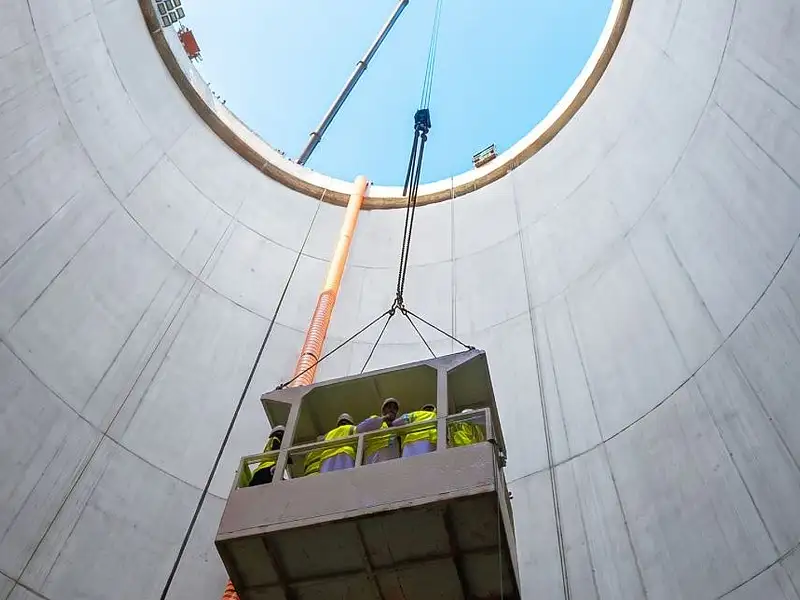
Dubai Municipality has become the first government entity in the world to receive international certification under ISO 24566, a global standard focused on managing stormwater services in response to climate change.
The Dubai Municipality climate-proof drainage certification marks a significant step in the emirate’s efforts to strengthen infrastructure resilience and prepare its stormwater drainage systems for changing weather conditions. The certification recognises the Municipality’s integrated approach to assessing climate risks and incorporating those assessments into the planning, design, operation and maintenance of stormwater drainage infrastructure.
The achievement reflects Dubai’s broader strategy of developing sustainable and future-ready infrastructure capable of responding effectively to environmental and climatic changes. It also supports the emirate’s focus on safeguarding communities, maintaining essential services and improving quality of life for residents and visitors.
The Municipality said the certification demonstrates the technical and organisational maturity of Dubai’s drainage infrastructure and reinforces its commitment to building systems that can remain efficient and reliable under changing climate conditions.
Eng. Adel Mohammed Al Marzouqi, CEO of the Waste and Sewerage Agency at Dubai Municipality, said the achievement reflects the vision of the UAE’s leadership to develop resilient infrastructure and strengthen Dubai’s position as a sustainable and future-ready city.
He said the adoption and implementation of ISO 24566 would strengthen the Municipality’s operational and field capabilities through systematic methods for addressing the impacts of climate change. The approach, he explained, is based on proactive planning and accurate data to improve efficiency while ensuring the continuity and sustainability of essential services.
The Dubai Municipality climate-proof drainage certification is particularly significant because stormwater management is becoming increasingly important as cities around the world face changing rainfall patterns and a greater need to prepare infrastructure for climate-related risks.
Under its new framework, Dubai Municipality has developed an integrated system for assessing climate-related changes and identifying the risks associated with those changes. The framework is designed to help the emirate’s stormwater drainage systems respond not only to existing challenges but also to future conditions.
Rather than relying solely on traditional drainage planning, the approach incorporates climate-risk assessment into infrastructure decision-making. This allows the Municipality to consider potential changes in rainfall patterns and their possible effects when planning and developing drainage networks.
The framework also supports evidence-based decision-making. By using accurate data and systematic assessments, Dubai Municipality can identify potential vulnerabilities, determine appropriate engineering responses and improve the long-term performance of its stormwater infrastructure.
ISO 24566 provides a structured framework for this process. The standard focuses on the management of stormwater services in the context of climate change and provides guidance for identifying climate-related risks, evaluating their potential consequences and developing appropriate engineering and operational measures.
For Dubai, the implementation of the standard extends across several stages of infrastructure management. These include planning new drainage systems, designing infrastructure, operating existing networks and maintaining drainage assets over time.
This integrated approach is intended to ensure that climate resilience is considered throughout the lifecycle of stormwater infrastructure rather than being treated as a separate or one-time consideration.
The certification also highlights the importance of maintaining service continuity. Stormwater drainage systems play a critical role in protecting urban areas, infrastructure and communities from the effects of heavy rainfall and water accumulation. Ensuring that these systems remain operational and adaptable is therefore an important part of urban resilience.
Dubai’s rapidly developing urban environment makes effective stormwater management particularly important. As the city continues to expand its residential, commercial, transport and public infrastructure, drainage networks need to be planned alongside broader urban development.
The Municipality’s framework is designed to support this requirement by linking climate-risk assessments with infrastructure planning and operational practices. This can help improve the ability of drainage systems to cope with changing environmental conditions while supporting the long-term sustainability of essential municipal services.
The certification also represents an organisational achievement. ISO 24566 does not simply relate to individual drainage assets; its implementation requires a structured approach to risk assessment, planning and management. Dubai Municipality’s achievement therefore reflects the development of processes and capabilities across its relevant operations.
According to the Municipality, the framework enables its stormwater drainage systems to address current challenges while adapting to future conditions through proactive planning and evidence-based decisions.
This approach can also improve the efficiency of infrastructure management. Identifying potential risks in advance allows authorities to develop appropriate measures before problems become more severe. It can also support more informed decisions about the design, operation and maintenance of drainage networks.
The Dubai Municipality climate-proof drainage certification comes as the UAE and Dubai continue to advance their wider climate and environmental sustainability agendas. The initiative aligns with efforts to strengthen climate action, improve environmental sustainability and contribute to national climate-neutrality objectives.
The move demonstrates how climate considerations are increasingly being incorporated into the management of essential urban infrastructure. Instead of focusing only on reducing environmental impacts, cities are also required to ensure that infrastructure can withstand and adapt to changing climatic conditions.
For Dubai, this means preparing stormwater systems for a future in which rainfall patterns and associated risks may evolve. The application of ISO 24566 provides a recognised international framework for incorporating these considerations into the management of drainage services.
The certification could also strengthen Dubai’s position as a reference point for other cities seeking to develop climate-resilient infrastructure. As urban centres worldwide face increasing pressure to adapt infrastructure to climate risks, internationally recognised standards can provide a structured basis for developing effective approaches.
Dubai Municipality’s achievement demonstrates the potential value of combining international standards with local climate-risk assessments, engineering expertise and operational data.
The Municipality’s approach brings together several elements that are essential for resilient infrastructure: understanding climate risks, using reliable data, planning proactively, designing appropriate systems and ensuring effective operation and maintenance.
The emphasis on the full infrastructure lifecycle is particularly important. A drainage system’s resilience depends not only on its initial design but also on how effectively it is operated, monitored and maintained over time. Changing climate conditions can create new risks, making continuous assessment and adaptation necessary.
Through the implementation of ISO 24566, Dubai Municipality is seeking to establish a systematic process for managing these challenges.
The certification therefore represents more than an international recognition for Dubai Municipality. It signals a broader shift towards integrating climate resilience into everyday infrastructure planning and municipal operations.
As Dubai continues to position itself as a sustainable and future-ready city, resilient stormwater infrastructure will remain an important component of its urban development strategy. The new certification provides an internationally recognised framework for strengthening that resilience and ensuring that essential drainage services can continue to operate effectively as environmental conditions change.
The Dubai Municipality climate-proof drainage certification ultimately reinforces the emirate’s focus on preparedness, sustainability and long-term infrastructure reliability. By combining climate-risk assessment with engineering and operational planning, Dubai Municipality aims to ensure that its stormwater networks remain capable of supporting communities and urban development in the years ahead.
Post Views: 32