Dubai gold prices continued to decline on Friday, September 25, with the precious metal extending its recent weakness amid a stronger US dollar, higher US Treasury yields and growing concerns about inflation.
According to the Dubai Jewellery Group, 24K gold was trading at Dh513.75 per gram at the market open on Friday, down slightly from Dh514.25 per gram at Thursday’s market close. The latest move extends a broader decline that has taken the price of 24K gold down by around Dh40 per gram over the past month.
A month earlier, gold in Dubai was trading at approximately Dh554 per gram. The decline highlights the pressure currently facing the precious metal after a period of strong performance.
DUBAI GOLD PRICES DECLINE ACROSS MAJOR VARIANTS
Other commonly traded gold categories in Dubai also recorded lower prices on Friday.
The 22K gold price stood at Dh475.75 per gram, while 21K gold was trading at Dh456.00 per gram. The price of 18K gold was Dh391.00 per gram at the market open.
The movement in local gold prices broadly reflects developments in international markets, where investors have been responding to changes in currency markets, interest rates, inflation expectations and government bond yields.
Spot gold was trading at approximately $4,261 per ounce on Friday, while silver was down 0.2 per cent at around $63.40 per ounce.
The recent decline comes after gold faced renewed pressure from several macroeconomic factors that traditionally weigh on non-interest-bearing assets.
STRONGER US DOLLAR CREATES PRESSURE
One of the key factors affecting gold prices has been the strength of the US dollar.
Gold is internationally priced in dollars, meaning a stronger US currency can make the precious metal relatively more expensive for buyers holding other currencies. This can reduce demand and contribute to downward pressure on international gold prices.
At the same time, US Treasury yields have moved higher. Rising yields increase the relative attractiveness of interest-bearing assets compared with gold, which does not generate interest income.
The combination of a stronger dollar and higher yields has therefore created a challenging environment for the precious metal.
INFLATION CONCERNS ADD TO MARKET PRESSURE
Inflation has also emerged as an important factor influencing investor expectations.
Higher oil prices have contributed to concerns that inflationary pressures could remain elevated. Persistent inflation can influence expectations surrounding monetary policy and interest rates, particularly in the United States.
Markets have consequently been reassessing the potential path of US Federal Reserve policy.
For gold investors, the prospect of tighter monetary conditions can create short-term headwinds because higher interest rates and real yields increase the opportunity cost of holding an asset that does not pay interest.
SAXO BANK SEES A HOSTILE MACROECONOMIC BACKDROP
Ole Hansen, head of commodity strategy at Saxo Bank, said gold is facing an increasingly challenging macroeconomic environment.
According to Hansen, US Treasury yields, real yields and the dollar have all been rising as markets price in inflation risks and expectations of tighter Federal Reserve policy.
He noted that higher yields represent a near-term obstacle for gold. However, he also pointed to potential longer-term financial risks associated with elevated borrowing costs.
Higher borrowing costs can increase pressure on governments, companies and other highly leveraged parts of the financial system. Such risks could potentially become an important consideration for investors if financial conditions tighten significantly.
INVESTMENT DEMAND REMAINS RESILIENT
Despite the recent decline, demand for gold investment products has remained relatively strong.
Hansen pointed to Bloomberg data showing that global gold exchange-traded fund holdings increased by almost 50 tonnes during September, despite the rise in real yields.
This suggests that some investors continue to view gold as an important portfolio asset even as traditional macroeconomic conditions become less supportive.
Gold’s role as a store of value and a potential hedge against financial and economic uncertainty remains an important factor behind investment demand.
CHINESE GOLD DEMAND REMAINS STRONG
China is another important factor supporting the global gold market.
According to Hansen, Chinese gold imports exceeded 1,000 tonnes through August, already surpassing the country’s total imports during the whole of 2025.
Strong Chinese demand provides an important counterweight to the macroeconomic pressures affecting gold in other markets.
China is one of the world’s major gold-consuming markets, with demand influenced by jewellery consumption, investment activity and broader economic expectations.
The strength of Chinese imports indicates that underlying physical demand remains significant despite the recent international price correction.
GOLD FACES A MIXED OUTLOOK
The latest decline in Dubai gold prices illustrates the conflicting forces currently influencing the precious metal.
On one side, higher US yields, rising real yields and a stronger dollar are creating pressure on gold. Inflation concerns linked to higher oil prices are also influencing expectations about future monetary policy.
On the other side, investment demand remains resilient, while physical demand from China continues to provide support.
The precious metal is therefore being pulled in different directions by financial-market conditions and underlying demand.
DUBAI GOLD MARKET REMAINS CLOSELY LINKED TO GLOBAL TRENDS
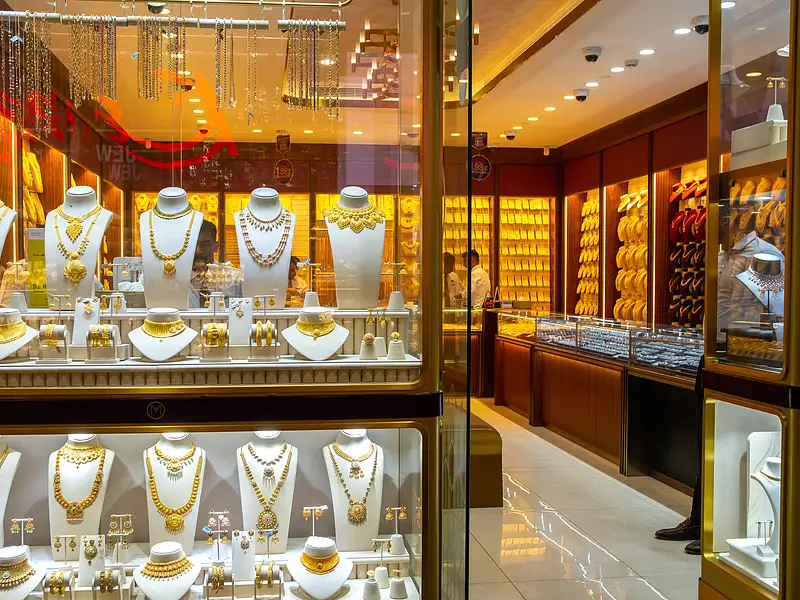
Dubai is one of the world’s major gold trading and retail centres, making local prices closely connected to international gold movements.
For consumers, the decline means that gold is now considerably cheaper than it was a month earlier. However, the actual price paid by jewellery buyers can vary depending on making charges, retailer pricing and other applicable costs.
The decline may therefore be relevant both to investors monitoring gold as an asset and to consumers considering jewellery purchases.
The current market also demonstrates how quickly local gold prices can respond to movements in international currencies, bond yields and expectations surrounding monetary policy.
WHAT COMES NEXT FOR GOLD PRICES?
The direction of gold prices in the near term will likely remain sensitive to movements in US Treasury yields, the dollar, inflation expectations and Federal Reserve policy expectations.
A continued rise in real yields and the dollar could maintain pressure on gold. However, sustained investment demand, strong physical consumption in major markets and concerns about financial-system risks could provide support.
For Dubai’s gold market, international price movements will remain an important determinant of local prices.
As of Friday morning, 24K gold stood at Dh513.75 per gram, marking a significant decline from approximately Dh554 per gram a month earlier.
The latest fall underscores the changing dynamics of the global gold market, where strong underlying demand is currently competing with a more challenging macroeconomic environment.
Post Views: 19