Dubai construction regulation is entering a new phase as Dubai Municipality hosts the first “Future of Construction Legathon”, bringing together government authorities, industry stakeholders, technology innovators and specialists to explore how regulations can evolve alongside rapidly developing construction technologies.
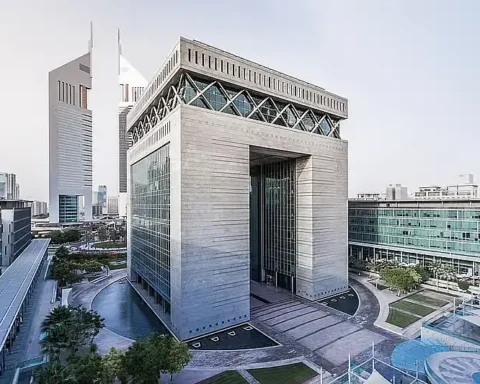
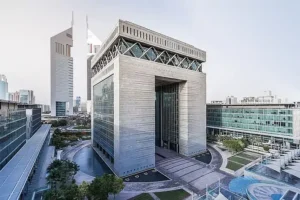
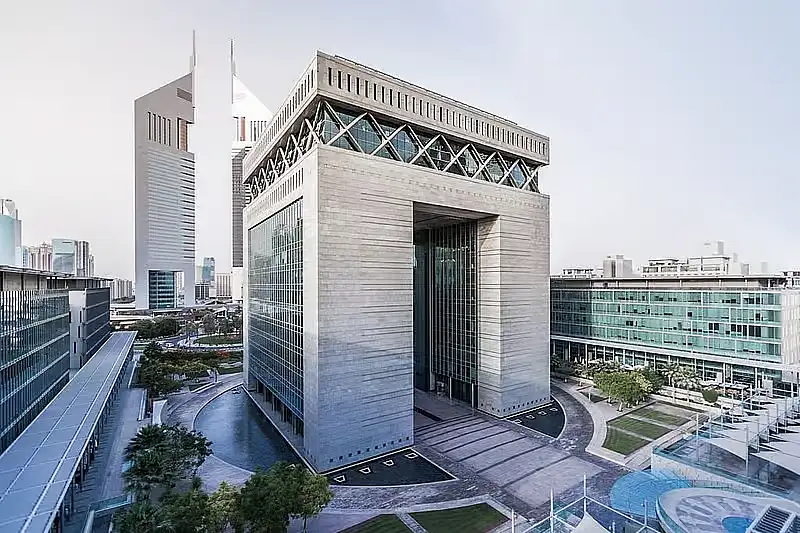
The event, held at Emirates Towers, focused on practical regulatory and legislative challenges associated with the adoption of emerging technologies in the building and construction sector.
The initiative is designed to create a stronger connection between technological innovation and the regulatory framework governing Dubai’s construction industry.
As construction technology continues to develop, Dubai Municipality is seeking to create mechanisms through which new technologies can be tested, assessed and potentially incorporated into future regulations and licensing requirements.
DUBAI MUNICIPALITY AND DUBAI FUTURE FOUNDATION SIGN AGREEMENT
A key development at the event was the signing of a cooperation agreement between Dubai Municipality and Dubai Future Foundation.
The agreement aims to accelerate innovation through regulatory experimentation under Sandbox Dubai.
Initially, the cooperation will focus on the Smart Built Environment sandbox group, with the possibility of expanding the partnership into other mutually agreed areas in the future.
The framework will allow both entities to conduct regulatory and innovation experiments, exchange knowledge and test new approaches within Dubai’s construction sector.
The partnership is intended to establish a structured environment where emerging construction technologies can be examined under controlled conditions before potential wider implementation.
HOW THE CONSTRUCTION SANDBOX WILL WORK
Under the agreement, Dubai Municipality and Dubai Future Foundation will jointly contribute to the design and implementation of experimental use cases.
These experiments will include clearly defined objectives, success indicators and evaluation criteria.
Dubai Municipality will coordinate with relevant technical departments and establish the requirements and controls needed to assess construction technologies and pilot projects.
Dubai Future Foundation, meanwhile, will support overall coordination and documentation through the Sandbox Dubai platform.
The process is intended to generate evidence that can be used to understand how new technologies perform in real-world or controlled environments.
The lessons and evidence generated through these experiments will then be analysed to inform future policy recommendations and regulatory frameworks.
Where a particular solution is successfully validated, the two entities will also examine opportunities for broader adoption or replication within Dubai.
WHY DUBAI IS TESTING REGULATIONS
Emerging technologies are changing the way buildings can be designed, constructed, monitored and managed.
Technologies used in areas such as automation, digital construction, smart buildings and advanced building systems can introduce capabilities that existing regulations may not have been designed to address.
The Future of Construction Legathon provides a forum for government and industry stakeholders to identify these challenges and develop practical responses.
Instead of waiting for technological developments to create regulatory gaps, the initiative aims to provide a mechanism through which regulators can study emerging solutions and gather evidence before developing or modifying regulatory approaches.
This could help create a regulatory environment capable of responding more quickly to technological changes while maintaining established governance and compliance requirements.
INDUSTRY AND GOVERNMENT WORK TOGETHER
One of the main objectives of the Legathon is to strengthen cooperation between government entities and the private sector.
Participants examined specific regulatory challenges and worked on practical solutions designed to support innovation without compromising effective governance.
The initiative also seeks to broaden participation in the development of future building regulations and licensing requirements.
By involving technology companies, construction businesses, specialists and other industry stakeholders, authorities can obtain direct insights into the practical challenges associated with introducing new technologies.
This approach can also help identify regulatory barriers that may not be immediately apparent from a government perspective.
CREATING CLEARER PATHWAYS FOR INNOVATION
Maryam Al Muhairi, CEO of the Buildings Regulation and Permits Agency at Dubai Municipality, said the Future of Construction Legathon reflects an approach to developing a regulatory environment that evolves alongside technologies shaping the construction sector.
She said the objective is to create clearer pathways through which new ideas and technologies can be examined, tested and evaluated while maintaining strong standards of governance and compliance.
Al Muhairi also highlighted the importance of bringing regulatory, technical and industry expertise together around real-world challenges.
According to her, the initiative can help create a stronger evidence base for future decision-making and support more agile regulatory approaches.
The broader objective is to enable innovation while contributing to a more efficient and future-ready construction ecosystem.
DUBAI FUTURE FOUNDATION SUPPORTS EXPERIMENTATION
Khalifa Al Qama, Chief of Research, Development and Innovation at Dubai Future Foundation, said the future of construction would have implications for cities, economies and communities.
He said regulatory frameworks need to evolve alongside the construction sector as Dubai continues to develop.
The partnership reflects an approach based on collaboration between government and industry, with the aim of allowing new ideas to move from early-stage possibilities toward real-world applications.
The Sandbox Dubai platform will provide an important mechanism for coordinating experiments, documenting results and supporting knowledge exchange.
SUPPORT FOR START-UPS AND TECHNOLOGY PROVIDERS
The initiative will not be limited to established construction companies.
The cooperation will also support engagement with innovators, start-ups, scale-ups and local and international technology providers.
These companies will have opportunities to demonstrate, test and assess new technologies, products and business models through appropriate channels.
The initiative will also help connect innovators with relevant government authorities and industry stakeholders.
This could provide technology companies with greater clarity about regulatory requirements while giving government entities better visibility into emerging solutions.
For start-ups and scale-ups, understanding regulatory requirements at an early stage can be important when developing products intended for the construction and property sectors.
WORKSHOPS AND KNOWLEDGE-SHARING
The partnership will also include workshops, training programmes and knowledge-sharing initiatives.
These activities are designed to strengthen institutional capabilities in areas related to the regulation and adoption of innovative construction technologies.
Knowledge-sharing can help government officials, industry professionals and technology providers better understand emerging market practices and regulatory considerations.
Training programmes can also support the development of expertise needed to evaluate new construction technologies and determine how they can operate within existing or future regulatory frameworks.
EVIDENCE TO INFORM FUTURE POLICIES
A significant feature of the sandbox model is its emphasis on evidence.
Instead of adopting new technologies solely on the basis of theoretical potential, experimental use cases can provide authorities with information about their actual performance.
Success indicators and evaluation criteria can be established before experiments begin.
The resulting data, observations and lessons can then be used to inform future policy recommendations.
Where an innovation meets the relevant requirements and demonstrates practical value, authorities can consider whether it should be adopted more broadly.
This creates a process through which experimentation can contribute directly to the evolution of Dubai construction regulation.
BALANCING INNOVATION WITH GOVERNANCE
While the initiative is designed to support innovation, Dubai Municipality has emphasised that technological experimentation will take place within appropriate governance and compliance controls.
This balance is important because construction technologies can have direct implications for building safety, structural integrity, fire protection, environmental performance and occupant wellbeing.
A regulatory sandbox can provide an environment in which these considerations are assessed alongside technological benefits.
The approach therefore seeks to avoid a situation in which innovation and regulation operate independently of one another.
Instead, both can evolve together through testing, evidence gathering and structured evaluation.
DUBAI’S BROADER CONSTRUCTION VISION
The Future of Construction Legathon forms part of Dubai Municipality’s wider efforts to strengthen compliance and governance while supporting the development of an agile construction sector.
The initiative also aligns with broader objectives around innovation, sustainability and future readiness.
Dubai has increasingly positioned itself as a testing environment for emerging technologies across multiple sectors.
Applying a sandbox approach to construction regulation extends this model to an industry where technological change can influence how cities are planned, built and managed.
WHAT THE INITIATIVE COULD MEAN FOR THE INDUSTRY
For construction companies, technology providers and property developers, clearer regulatory pathways could provide greater visibility when introducing emerging technologies.
For government authorities, controlled experimentation can offer an opportunity to understand technological developments before deciding how they should be addressed through regulation.
For innovators, engagement with regulators at an earlier stage can potentially help identify compliance requirements and technical considerations before products are deployed at scale.
The long-term outcome will depend on the results of individual experiments and how successfully lessons from the sandbox are incorporated into future regulatory frameworks.
A NEW MODEL FOR CONSTRUCTION REGULATION
The first Future of Construction Legathon marks an effort to bring regulatory development closer to technological innovation.
Through cooperation between Dubai Municipality and Dubai Future Foundation, the initiative creates a structured framework for testing new construction technologies while maintaining governance and compliance requirements.
The Smart Built Environment sandbox will serve as the initial area of cooperation, with the possibility of expanding into additional fields.
The programme will involve experimental use cases, measurable success indicators, technical controls, evidence gathering and evaluation.
Innovators, start-ups, scale-ups and technology providers will also have opportunities to engage with relevant government and industry stakeholders.
As Dubai’s construction sector continues to adopt new technologies, the development of flexible and evidence-based regulatory approaches could become increasingly important.
The Future of Construction Legathon therefore represents a practical step towards developing a regulatory system that can respond to technological change while maintaining the standards required for a safe, sustainable and well-governed built environment.
Post Views: 20