Dubai Automated Oil Testing Technology Boosts Food Safety
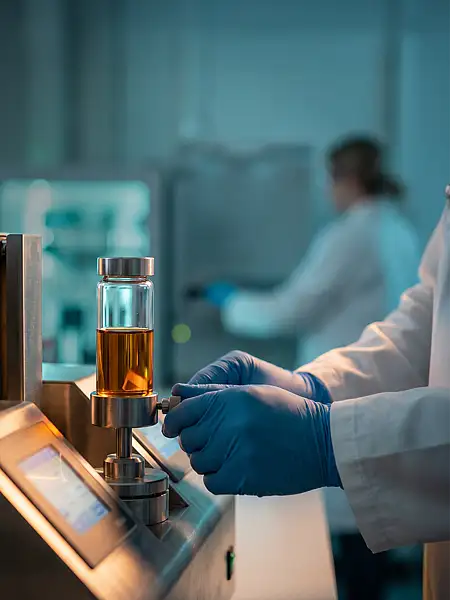
Dubai is strengthening its food safety and quality-control capabilities with the introduction of Dubai automated oil testing technology at the Dubai Central Laboratory. The new system dramatically reduces the time required to analyse oils and fats, cutting conventional testing time from approximately two hours to just two minutes.
The automated technology is designed to analyse samples without human intervention, allowing laboratory specialists to process significantly larger volumes of samples while maintaining the accuracy and reliability required under international standards.
According to Dubai Municipality, the system has increased the laboratory’s daily testing capacity by 900 per cent, rising from six samples a day to as many as 60 samples.
The development is part of Dubai’s wider efforts to modernise regulatory laboratories, improve food safety surveillance and introduce advanced technologies that can identify potential risks at an earlier stage.
Testing Time Reduced From Two Hours to Two Minutes
One of the most significant advantages of the new system is the reduction in analysis time.
Under conventional testing procedures, analysing the quality of oils and fats can take around two hours. The automated technology reduces this period to approximately two minutes, enabling laboratory teams to obtain results much faster.
The speed is particularly important for food products where oil and fat quality can change during manufacturing, transportation and storage.
The system can identify early indicators associated with the oxidation and deterioration of oils and fats. Early detection can help authorities and food-sector stakeholders identify potential quality problems before they become more significant.
Faster analysis also allows regulatory authorities to respond more quickly when samples indicate a possible food-quality concern.
Daily Testing Capacity Rises From Six to 60 Samples
The technology has also significantly expanded the Dubai Central Laboratory’s ability to process samples.
Before the introduction of the automated system, the laboratory could process around six relevant samples per day. The new technology increases that capacity to approximately 60 samples daily.
This represents a tenfold increase in the number of samples that can be handled each day and a reported 900 per cent increase in testing capacity.
The higher capacity means Dubai Municipality can analyse a much larger number of samples without requiring a proportional increase in testing time.
For a city with a large and highly active food manufacturing, hospitality and retail sector, increased laboratory capacity can play an important role in supporting continuous food safety monitoring.
Automated Analysis Reduces Human Intervention
The new system is designed to automate the analysis process, reducing the need for manual intervention during testing.
Samples can be processed automatically and the system generates results while maintaining the accuracy and reliability expected from laboratory testing.
Automation can help laboratories improve operational efficiency by reducing repetitive manual processes and allowing technical personnel to focus on more complex laboratory and regulatory activities.
It can also contribute to greater consistency in testing procedures because samples are processed through a standardised automated workflow.
Early Detection of Oil and Fat Oxidation
The technology is particularly important because it can detect early indicators associated with the oxidation of oils and fats.
Oxidation can affect the quality of oils and fats during manufacturing and storage. Monitoring these changes can therefore help identify potential deterioration at an earlier stage.
For food regulators, early identification is important because it can support proactive rather than purely reactive food safety measures.
The ability to obtain results within minutes means that potential quality issues can be assessed more rapidly, helping authorities make faster decisions when necessary.
Supporting Food Manufacturing and Storage
Oil and fat quality is relevant across a wide range of food manufacturing processes. Oils may be used in cooking, food preparation and industrial production, while fats are important ingredients in numerous processed food products.
Their quality can be influenced by factors such as processing and storage conditions.
By increasing the speed and volume of laboratory testing, Dubai’s new technology provides authorities with greater capacity to monitor these products throughout the food supply chain.
The system therefore supports Dubai’s broader regulatory objective of ensuring that food products available in the emirate comply with approved standards and specifications.
Technology Supports Greener Laboratory Operations
The new system also has an environmental dimension.
Dubai Municipality said the technology eliminates the chemical consumables required by conventional testing methods. This reduces the use of laboratory resources and can lower the environmental impact associated with testing operations.
Reducing chemical consumption can contribute to more sustainable laboratory practices while simultaneously improving testing efficiency.
This combination of automation, higher capacity and reduced resource consumption reflects the growing role of technology in modern regulatory laboratories.
Dubai Municipality Highlights Consumer Protection
Hind Mahmoud Ahmed, Director of the Dubai Central Laboratory Department at Dubai Municipality, said the technology would improve the speed and efficiency of laboratory testing while maintaining the accuracy needed to support food safety and consumer protection.
She said increasing testing capacity and enabling faster analysis would strengthen proactive regulatory processes and allow authorities to respond more efficiently to developments within the food manufacturing sector.
According to Ahmed, the technology can also contribute to consumer confidence by allowing potential quality problems to be identified more rapidly.
The ability to conduct faster testing can help authorities verify compliance with approved international standards and specifications while supporting the quality of food products available to consumers in Dubai.
Part of Dubai’s Wider Food Safety Strategy
The introduction of automated oil and fat testing technology comes as Dubai continues to expand its laboratory infrastructure and food safety capabilities.
Earlier in 2026, Dubai Municipality launched the UAE’s first laboratory dedicated to detecting foodborne viruses.
The ViruGenetics Lab at Dubai Central Laboratory uses genomic technologies to detect foodborne viruses and can process approximately 60 samples per day under normal conditions.
During emergencies, the laboratory’s capacity can increase to around 100 samples a day.
The facility represents another major step in Dubai’s efforts to use advanced scientific technologies to strengthen food safety surveillance.
ViruGenetics Lab Handles Complex Food Samples
The ViruGenetics Lab is equipped to analyse complex food samples, including dairy products, seafood, juices and fresh produce.
One of its important capabilities is its ability to maintain testing accuracy even when samples contain substances that could interfere with conventional testing methods.
Its procedures are conducted in accordance with ISO/IEC 17025 standards, an internationally recognised framework for the competence of testing and calibration laboratories.
The facility therefore complements Dubai’s broader investment in advanced laboratory infrastructure and scientific testing capabilities.
What the New Technology Means for Dubai’s Food Sector
The latest automated oil and fat testing system could have several implications for Dubai’s food ecosystem.
First, faster testing can support more responsive regulatory oversight. Authorities can obtain laboratory results considerably faster, allowing potential issues to be assessed without the delays associated with conventional testing.
Second, higher testing capacity enables a larger number of samples to be analysed. Moving from six to 60 samples per day gives Dubai Municipality significantly greater monitoring capability.
Third, automation can improve laboratory productivity by reducing manual intervention and standardising testing processes.
Fourth, the elimination of chemical consumables supports Dubai’s efforts to make laboratory operations more environmentally responsible.
Finally, faster and more extensive testing can contribute to greater consumer confidence in the quality and safety of food products available across the emirate.
A Shift Towards Proactive Food Safety Monitoring
The development reflects a broader shift from reactive food safety management towards proactive monitoring.
Traditional laboratory testing remains important, but faster automated systems can provide regulators with more frequent and timely information.
For Dubai, this is particularly relevant given the scale and diversity of its food sector. The emirate is home to a large network of food manufacturers, restaurants, retailers, hospitality businesses and international food suppliers.
Advanced laboratory technology allows regulators to keep pace with this increasingly complex food ecosystem.
The combination of rapid testing, increased sample capacity, automation and internationally aligned standards can strengthen the overall food safety framework.
Dubai Continues to Invest in Smart Regulatory Technology
Dubai’s latest laboratory innovation is consistent with the emirate’s wider strategy of using automation, artificial intelligence, advanced analytics and scientific technologies to improve government services.
In the food safety sector, laboratory testing is a critical component of regulatory oversight. Reducing the time required to obtain reliable results can improve the efficiency of the entire regulatory process.
The new oil and fat testing system demonstrates how laboratory automation can simultaneously deliver faster results, higher testing capacity and lower resource consumption.
As Dubai continues to expand its food safety infrastructure, such technologies are likely to become increasingly important in supporting both regulatory authorities and the food industry.
Conclusion
Dubai automated oil testing technology marks another step in the emirate’s efforts to modernise food safety monitoring through advanced laboratory systems.
By reducing oil and fat analysis time from two hours to just two minutes and increasing daily testing capacity from six to 60 samples, the technology significantly improves the speed and scale of laboratory operations.
Its ability to operate automatically, detect early indicators of oxidation, generate results efficiently and eliminate chemical consumables adds further value.
Combined with the recently launched ViruGenetics Lab for foodborne virus detection, the development highlights Dubai Municipality’s expanding investment in advanced scientific infrastructure.
For consumers, manufacturers and regulators, faster and more comprehensive testing can help identify potential food-quality issues earlier, strengthen compliance and support confidence in the safety and quality of food products across Dubai.
Post Views: 4