Dubai international investment is continuing to expand as the UAE strengthens its economic and regulatory framework and positions itself as a major destination for global capital.
The trend is becoming increasingly visible across a wide range of industries, including financial services, technology, construction, real estate, development and other areas of the wider economy.
Dubai remains an important regional centre for companies seeking to establish operations in the Middle East, with its infrastructure, business environment and growing economic activity supporting interest from international businesses and investors.
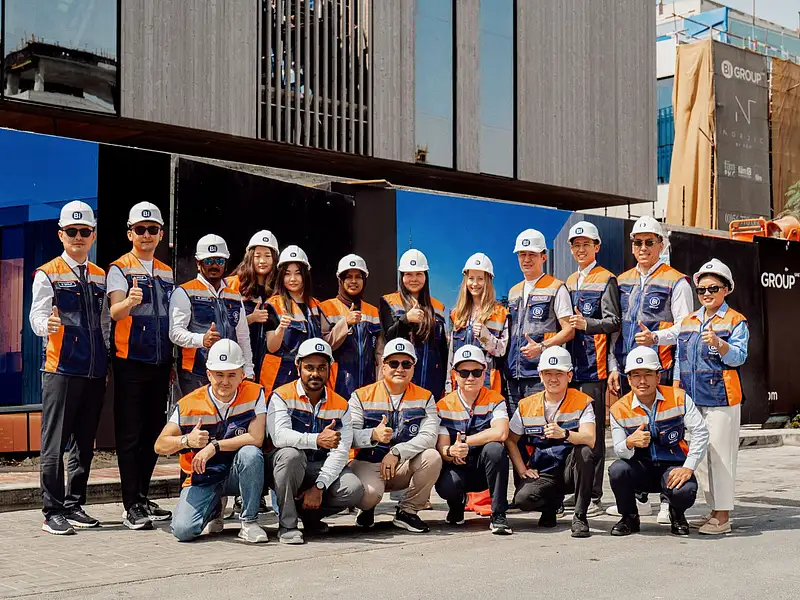
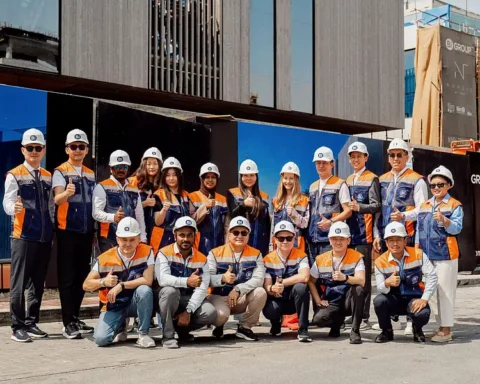
The latest expansion comes from Kazakhstan-based development and construction group BI Group, which is establishing a permanent operation in Dubai as part of its formal entry into the UAE market.
The move highlights the growing role of Dubai’s property sector within the wider investment landscape and comes as international developers examine opportunities across residential, commercial and mixed-use developments.
BI Group establishes Dubai operation
BI Group plans to use its new Dubai-based platform to oversee development activities, partnerships and project delivery in the UAE.
The company’s initial residential portfolio includes three developments, while additional residential and mixed-use opportunities are being evaluated.
Its next planned launch is Meydan Horizon, which forms part of a broader development pipeline being assessed by the company in Dubai.
The expansion represents a significant step for the Kazakhstan-based group as it seeks to establish a long-term presence in one of the Middle East’s most active property markets.
Rather than approaching Dubai solely through individual projects, the company has indicated that it intends to gradually build a larger local platform.
This could eventually allow BI Group to move from individual developments towards larger master-planned communities.
UAE strengthens its appeal to global capital
The expansion of international companies comes against a broader backdrop of increasing global interest in the UAE.
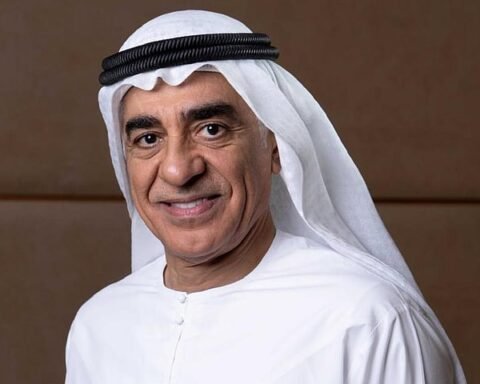
Waleed Saeed Al Awadhi, chief executive officer of the UAE Capital Market Authority, recently highlighted the country’s growing position as an international destination for capital.
Speaking at the AFCM Annual Conference – Abu Dhabi 2026, Al Awadhi pointed to the resilience of the UAE economy, the development of its legislative and regulatory framework and the country’s ability to adapt to changing economic conditions.
He also noted that global capital markets have become increasingly sophisticated in assessing and pricing risks.
According to Al Awadhi, discussions with asset managers, banks and financial institutions in markets including Hong Kong and India have indicated changing perceptions of geopolitical risk in the region.
The comments underline the importance of the UAE’s regulatory and institutional development in attracting international investment.
Dubai remains a major regional business centre
Dubai’s position within the UAE’s investment ecosystem is closely linked to its role as a regional business centre.
The emirate has developed extensive infrastructure supporting international businesses, including financial institutions, technology companies, developers, professional-services firms and multinational corporations.
Its property market is also attracting increasing attention from international developers seeking exposure to residential and mixed-use demand.
For companies entering the UAE, Dubai can provide access to a combination of regional markets, international business networks and a large development ecosystem.
This has helped create opportunities across several segments of the economy.
The latest interest from BI Group demonstrates how Dubai’s investment appeal extends beyond financial services and technology into the real economy, particularly construction and property development.
BI Group brings international development experience
Founded in Kazakhstan in 1995, BI Group has expanded from a regional construction company into an international group involved in investment, master planning, design, engineering, construction, development and asset management.
The company has developed projects across several sectors and markets.
Its portfolio includes residential and mixed-use developments, hotels, educational facilities, transport infrastructure, sports venues and renewable-energy projects.
BI Group said it has delivered more than 150 million square feet of real estate through more than 250 projects globally and employs more than 8,000 people.
The company’s international experience is particularly relevant to its plans for Dubai as the group seeks to apply its development model to the UAE market.
BigVilles model enters the UAE conversation
One of BI Group’s established development concepts is its large residential districts, known as “BigVilles”.
These developments combine residential properties with public spaces, landscaping, education, retail and community infrastructure.
The model reflects a broader shift in real estate development, where residential projects are increasingly designed as integrated communities rather than collections of individual buildings.
For Dubai, where master-planned communities have become an important part of the property market, the model could provide opportunities for international developers seeking to introduce large-scale development concepts.
BI Group’s Dubai expansion could therefore extend beyond conventional residential projects if the company proceeds with its stated ambition to develop larger master-planned communities.
Local partnerships form part of expansion strategy
The company has indicated that its UAE operation will be built around a locally based team and partnerships within the country.
Aidyn Rakhimbayev, chief executive officer of BI Group Holding, said the company intends to establish a long-term business in the UAE.
Ruslan Yembergenov, CEO of BI Group UAE, also highlighted the role of a locally based team and UAE partnerships in the company’s Dubai strategy.
For international developers, local partnerships can provide access to market knowledge, regulatory expertise, project networks and established relationships across the construction and property sectors.
The approach also reflects the increasing maturity of Dubai’s real estate ecosystem, where international and local companies frequently collaborate on major development projects.
Residential development remains a major opportunity
The residential sector remains an important part of Dubai’s broader investment story.
International developers are assessing opportunities across different segments, including apartments, villas, mixed-use communities and large-scale master-planned developments.
Population growth, business expansion and continued international interest in living and working in Dubai have supported demand for residential property.
The city’s infrastructure investment has also expanded the areas where developers can consider new projects.
For international groups such as BI Group, the opportunity extends beyond selling individual properties.
Large-scale development can create longer-term business opportunities across construction, asset management, retail, hospitality, education and community infrastructure.
This integrated approach is particularly relevant to companies with experience in large residential districts.
Investment interest extends beyond property
Although real estate remains a visible part of the current investment trend, Dubai international investment is not limited to property.
The UAE continues to attract companies and capital across financial services, technology, infrastructure, construction and other sectors.
The diversification of investment activity reflects the broader development of the UAE economy.
Dubai’s technology ecosystem has also attracted international companies, while its financial services industry continues to serve businesses and investors from across the region and beyond.
Infrastructure investment creates additional opportunities for engineering, construction, logistics and professional-services companies.
The result is an investment environment in which different sectors can reinforce each other.
A developer entering Dubai, for example, can create demand for construction services, engineering companies, financial institutions, professional advisers, technology providers and asset-management businesses.
International capital increasingly focuses on risk and resilience
The UAE’s ability to attract international investment also depends on how global investors assess risk.
International capital is increasingly evaluating markets based on a combination of economic growth, regulatory clarity, infrastructure, political stability, market access and long-term investment opportunities.
The comments from the UAE Capital Market Authority reflect this changing investment environment.
Global investors have become more sophisticated in assessing geopolitical developments and their potential effects on individual markets.
The UAE’s efforts to strengthen its regulatory and legislative framework are therefore an important component of its broader investment strategy.
For Dubai, this provides a foundation for attracting companies seeking a regional base from which to operate across Middle Eastern and international markets.
BI Group’s expansion adds to Dubai’s international developer base
BI Group’s entry into Dubai adds another international development group to the emirate’s increasingly diverse property sector.
The company brings experience across construction, development, engineering and large-scale community planning.
Its initial three-project residential portfolio provides an entry point into the market, while additional opportunities remain under evaluation.
The planned Meydan Horizon launch could become an early demonstration of the company’s approach to the UAE market.
If the Dubai operation expands as planned, the company could eventually participate in larger projects and master-planned developments.
Stronger global links could support investment flows
The continued arrival of international companies is part of a broader process through which Dubai is strengthening its links with global business centres.
Companies from Asia, Europe and other international markets are increasingly examining the UAE as a base for regional operations.
The country’s geographic position, transport connectivity and established business infrastructure contribute to its role as a bridge between major international markets.
Dubai’s property sector benefits from this broader business environment because companies entering the emirate create demand for offices, housing, retail, hospitality and supporting infrastructure.
This creates a connection between foreign direct investment and the wider real economy.
UAE investment landscape continues to evolve
The growth of Dubai international investment is taking place as the UAE continues to develop its economic model.
The country has sought to strengthen sectors beyond traditional energy activity while building a broader ecosystem around finance, technology, tourism, real estate, infrastructure and advanced industries.
Dubai remains a central part of this strategy.
The emirate’s ability to attract international developers such as BI Group demonstrates the continued interest in its property market, while investment across other sectors indicates that international capital is increasingly engaging with the wider UAE economy.
The long-term impact will depend on how effectively new investments translate into business activity, employment, development and economic diversification.
Dubai’s global investment role continues to expand
BI Group’s establishment of a permanent Dubai operation provides another example of an international company seeking a long-term position in the UAE.
The company’s initial residential portfolio and plans to evaluate further projects reflect the continuing interest of international developers in Dubai.
At the same time, comments from the UAE Capital Market Authority highlight the broader factors supporting the country’s appeal to global investors, including economic resilience, regulatory development and infrastructure.
As more international businesses establish local operations, the investment landscape is becoming increasingly diverse.
For Dubai, this means international investment is no longer concentrated in a small number of sectors. Financial services, technology, construction, real estate and other parts of the economy are increasingly connected to global capital flows.
The continued expansion of Dubai international investment could therefore strengthen the emirate’s role as a regional centre for companies and investors seeking opportunities in the UAE and wider Middle East.
Post Views: 29